
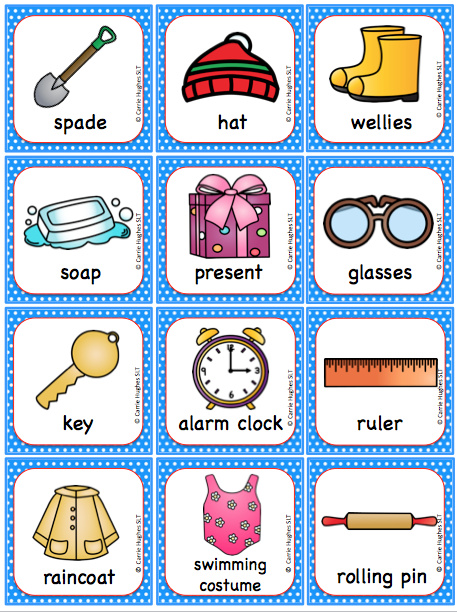

What? - Name the Object pack includes:
- 36 ‘What?’ questions related to everyday objects and 36 object picture cards.
- 24 board game style instruction cards.
- Activity ideas
Targets: Receptive and expressive language, vocabulary building, understanding and production of ‘what?’ questions, sentence planning, ideation, and visual and auditory processing skills. The resource also builds upon categorisation skills, creating semantic links, and understanding and expressing function.
Suitable for : Reception, Key Stage 1, SEN and EAL
-
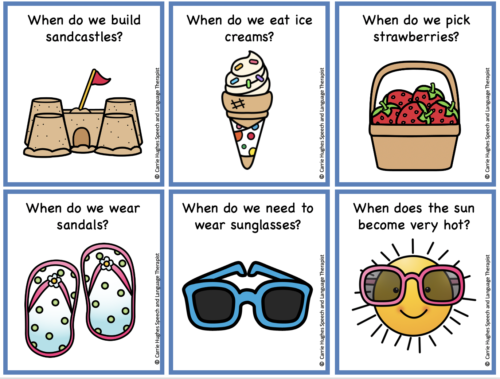
 The When? Seasons set is a sorting activity focusing on the early stages of the meaning and the use of 'when'. The set contains 48 questions based around the events of the the four seasons and four sorting boards. Written in British English. Suitable for Reception, Key Stage 1, EAL and SEN.
 -
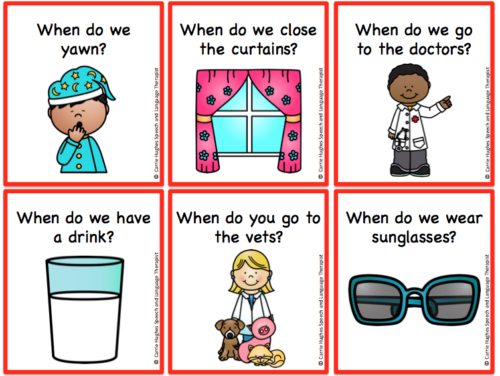
 When? Cause and Effect pack includes: 30 ‘When?’ cause and effect questions and 36 possible answer cards. Blank cards are also included for you to create alternative answers. Targets: Receptive and expressive language, vocabulary building, understanding and production of ‘what?’ questions. Sentence planning, ideation, and visual and auditory processing skills. The resource also builds upon categorisation skills and creating semantic links and understanding and expressing function. Written in British English Suitable for : Reception, Key Stage 1, SEN, EAL
 -
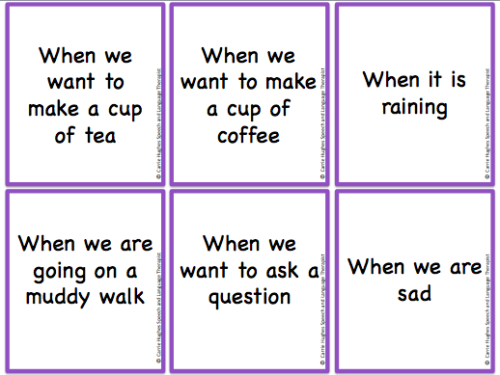
 When? Cause and Effect pack includes: 30 ‘When?’ cause and effect questions and 36 possible answer cards. Targets: Receptive and expressive language, vocabulary building, understanding and production of ‘what?’ questions. Sentence planning, ideation, and visual and auditory processing skills. The resource also builds upon categorisation skills and creating semantic links and understanding and expressing function. Written in British English Suitable for : Reception, KEY STAGE 1, SEN, and EAL
 -
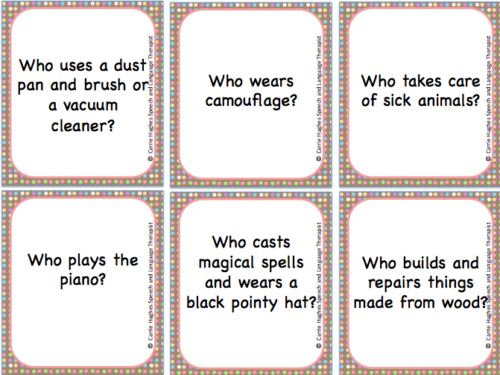
 58 questions and picture cards to target ‘who’. Uses pictures of people in the community (strictly speaking, the tooth fairy, Father Christmas, aliens and astronauts aren't in every community, but you know what I mean...) Written in British English. Suitable for: Reception, Key Stage 1, SEN and EAL
 -
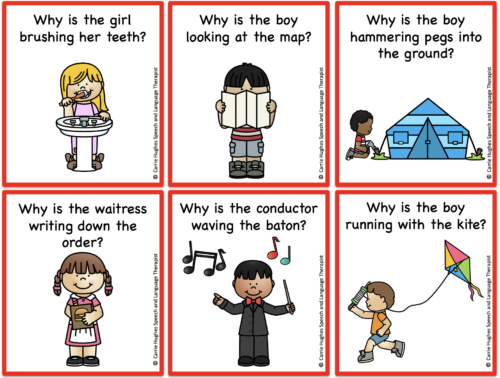
 The questions in this set work on the ability to 'make inferences', using the clues in the picture, such as clothes, objects or even crumbs, which hint at why the event is happening, or to 'make assumptions' from an abstract picture, using just a little imagination and creative thought. There are 66 questions in this pack. Written in British English Suitable for Reception, Key Stage 1, SEN and EAL
 -
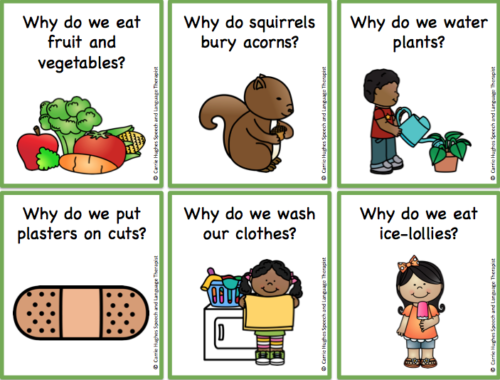
 The 'Why? questions' set is an update of my original 'why? question' set. This pack has 60 'why?' abstract questions that can be answered with 'because' and 'so'. Written in British English. Suitable for Reception, KS1, SEN and EAL.
 -
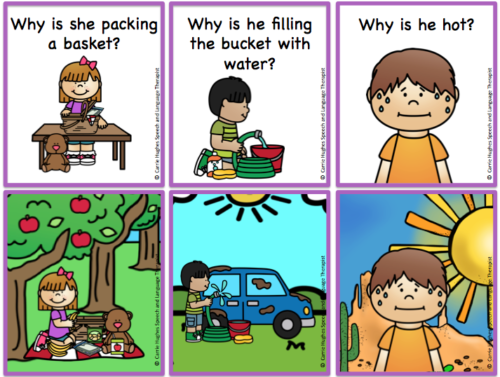
 This set targets one of the first stages of learning to answer 'why' questions, focusing on what is currently happening. The pack contains 30 easy 'why...because' questions. I've made a simple 'why' question card with a written question e.g. 'Why is the dog barking?' with a blank background, and the corresponding answer cards provides an obvious answer with full background picture. Suitable for Reception, Key Stage 1, SEN and EAL Written in British English but suitable for US populations too
 -

 'What are they doing to do? This set provides 18 short paragraphs with visual support, and 18 answer cards, detailing the objects used in an everyday activity. The students should use the written and picture clues to work out the nature of the activity. Targeting: making inferences, deduction, and 'wh' questions. Written in British English Suitable for Reception, Key Stage 1, SEN and EAL
 -
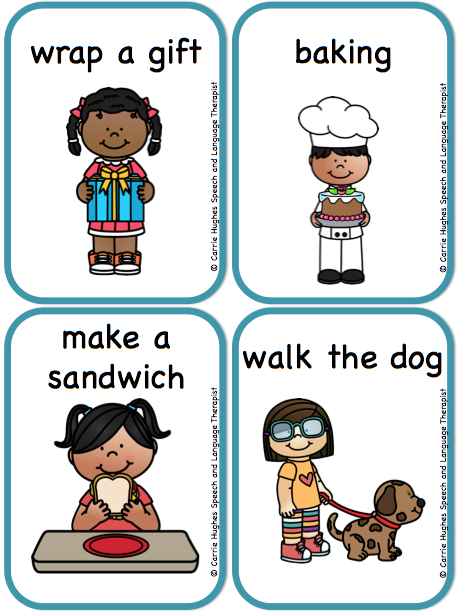
 Making Inferences - What do you see? This set comprises: 16 ‘clue’ cards with picture sets depicting an event or activity A set of ‘question ideas’ you can ask about each event or activity 16 answer cards with picture and word 16 answer cards with a picture The students should use the picture clues to work out the nature of the activity. Suitable for British and American English Suitable for Reception, Key Stage 1, SEN and EAL
 -
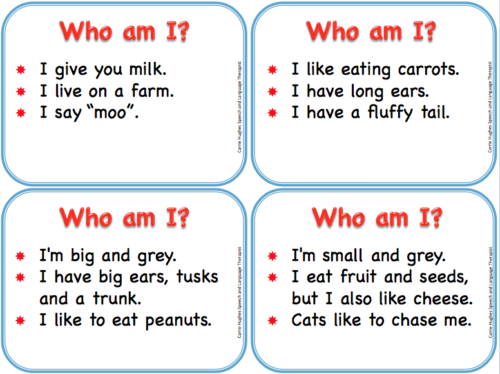
 This set includes:•28 ‘Who am I ? animal question cards with three or four questions per card.•28 ‘Who am I? animal question cards with highlighted clues.•28 Animal Images.'gold' coins for scoring.Play this game in small groups or individually.Targets the ability to make inferences from given information, categorisation, attention and listening, and receptive language skills.Written in British English.Suitable for Reception, KS1, EAL, and SEN
 -
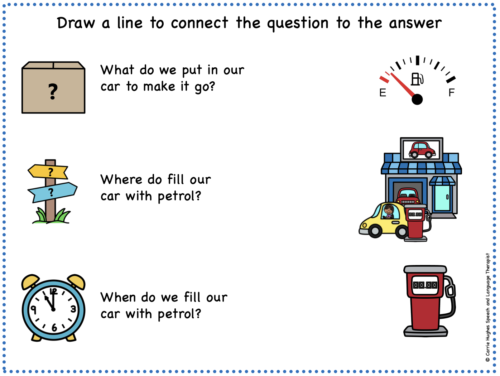
 You've worked on each type of 'wh' question and now it's time to make sure your student can work on any type of 'wh' question presented to them... Here's a pack of worksheets, supported with visuals to help generalise 'wh' questions. 40 pages in total. Suitable for Key stage 1, SEN, EAL Written in British English, but suitable for American audiences - only a couple of vocabulary differences.