-
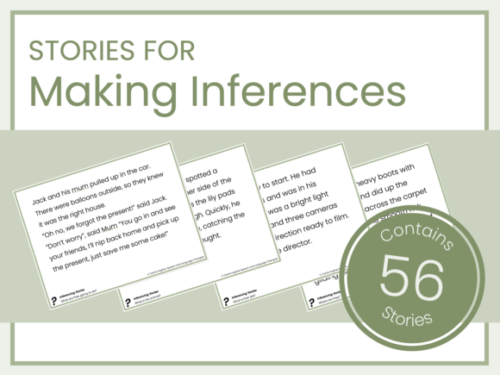 This resource is designed for teachers and speech & language therapists working on language and literacy, and support the development of inferencing skills. The pack contains a collection of 56 paragraphs filled with clues to determine the object, place, job, animal, and activity. The texts can be used with whole classes, groups and individual children. Written in British English Suitable for Key Stage 1 (with support), Key Stage 2, EAL and SEN
 -
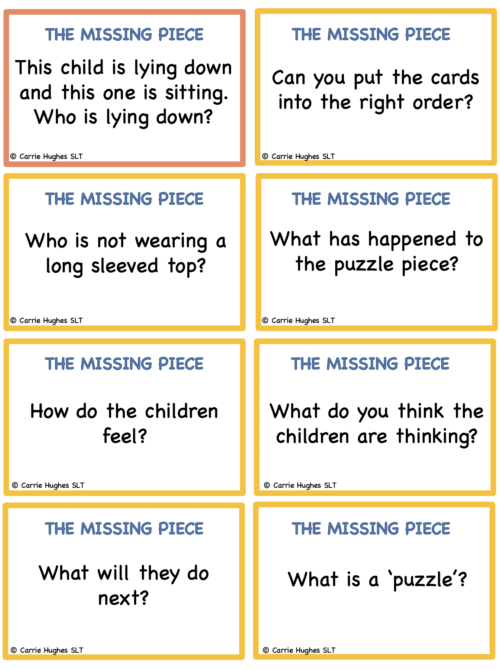
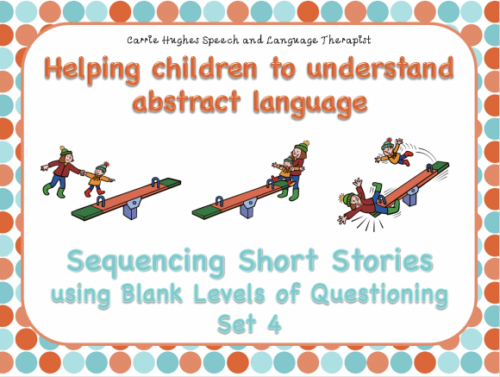 Helping children to understand abstract language using Blank Levels of Questioning 4 is a 28 page document containing 4 sequenced picture scenarios and question ideas formed around the Blank Model. To ensure you can use this pack flexibly I’ve given you options to use informally with just a list of questions, or more formally with a recording sheet so that you can record your observations and data. I’ve also included colour coded question cards so that you can play a game in a group. Written in British English Suitable for Pre-school, Reception, Key Stage 1 EAL, SEN.
 -
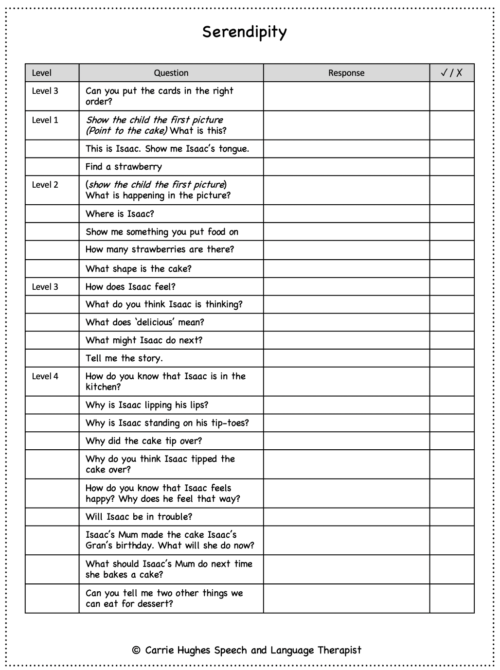
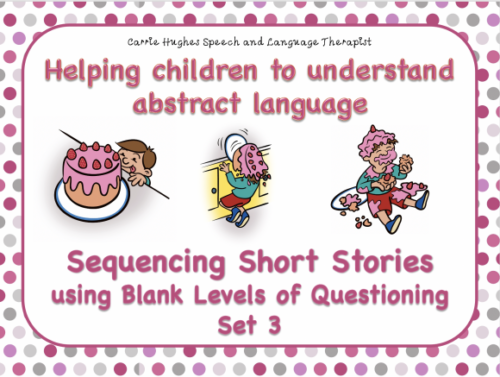 Helping children to understand abstract language using Blank Levels of Questioning is a 15 page document containing 4 sequencing scenarios and question ideas formed around the Blank Model.
- Stuck on the roof (5 pictures)
- Holiday Chaos (6 pictures)
- Runaway Donkey (5 pictures)
- Serendipity (4 pictures)
-
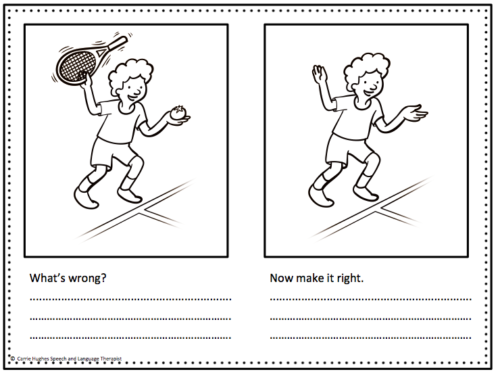
 This set is perfect for working on making inferences and forming judgements, justifying, problem solving and general higher level language skills. Each set contains 10 picture scenes, and 10 black and white worksheets to colour in and 'make it right'. Suitable for Pre-school, Reception, KS1, SEN, EAL and some adult populations.
 -
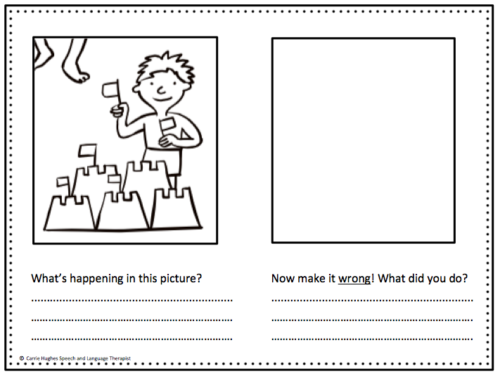
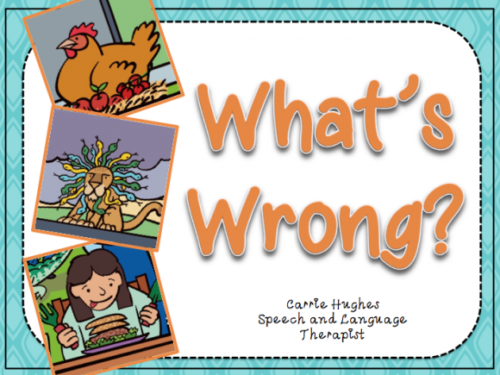 The What's Wrong? - Picture and Activity Pack includes a colour, and black and white image and a set of work sheets to help children work out what's normal and not so normal. I've included: 9 worksheets with opportunities to express why something isn't quite right and how it could be changed to make it right. 8 worksheets of new pictures showing something quite normal where children have to use their creativity and imagination to make it not quite right. Targets: Attention and focus, expressive language and higher level language skills, ideation and creativity.
 -
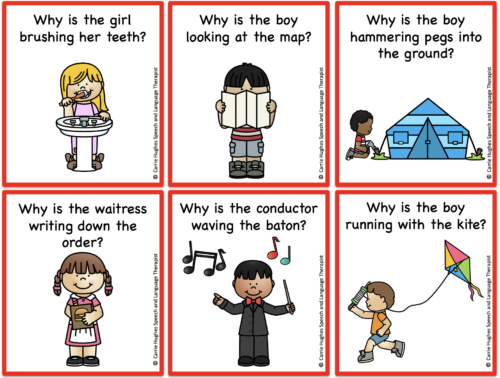
 The questions in this set work on the ability to 'make inferences', using the clues in the picture, such as clothes, objects or even crumbs, which hint at why the event is happening, or to 'make assumptions' from an abstract picture, using just a little imagination and creative thought. There are 66 questions in this pack. Written in British English Suitable for Reception, Key Stage 1, SEN and EAL
 -
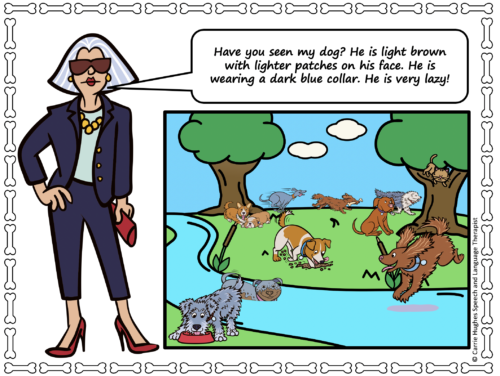
 ‘Have you seen my dog?’ is a deduction activity which can be used to target deduction, inferencing skills, key word understanding, attention and listening, receptive and expressive language, and working memory. This pack contains:
- 1 large scene filled with dogs
- 5 question cards showing owners describing their dogs
-
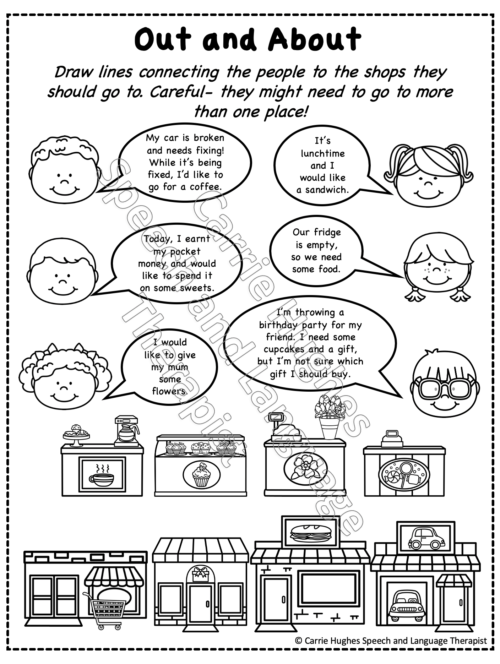
 This set is designed to meet the needs of children who require practice in looking for meaning in different text types and illustrations. The pack contains 10 worksheets. A lovely no preparation activity! Suitable for Reception, Key Stage 1, SEN and EAL Written in British English
 -
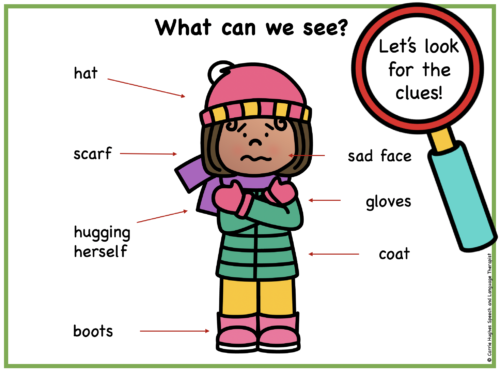
 We make assumptions and inferences from the simplest of pictures without giving it much thought, but so many of the children we work with find this really tricky. So this set goes right back to basics, and instead of questioning and testing, it 'teaches' children what to look for. 49 pages of activities Written in British English Suitable for Reception, Key Stage 1, SEN and EAL
 -
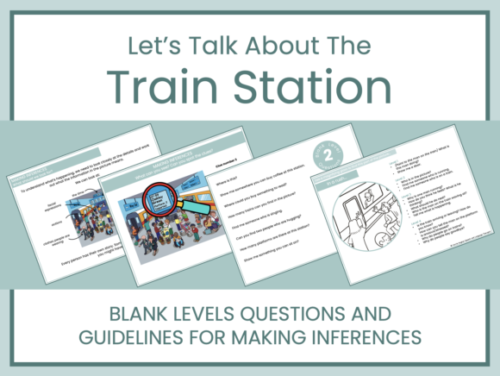 THIS IS A DOWNLOADABLE SET An action packed picture with lots to talk about! There’s so much to look at! The time, platform numbers and all the people tell a story – can you work out what’s going on and why people are behaving the way they are? Great for making inferences, justifying, ideation, deduction and expressive language. It can also be used to practice pronouns, adjectives, prepositions, ‘wh’ questions, possession, and much more more! In this set, you'll find guidance to help your student focus on the areas to look at make inferences about what is happening, and blank level questions are also included. The pack comes with a colour version of the picture for you to print out, and also a black and white version for your students to colour in. An A3 already printed version is also available in the PRINTED RESOURCES section. (worksheets not included) Suitable for Reception, Key Stage 1, Key Stage 2, EAL and SEN
 -
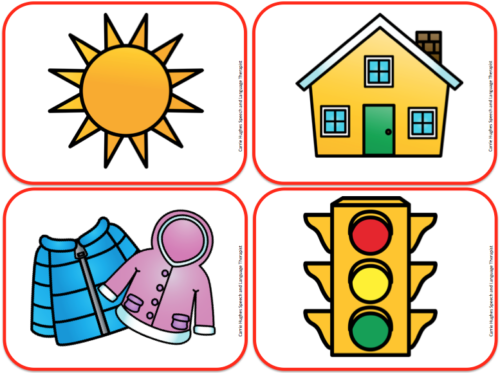
 This set includes:•36 ‘What am I ? object question cards with three or four questions per card•36 ‘What am I? object question cards with highlighted clues•36 Object Images'gold' coins for scoring.Play this game in small groups or individuallyTargets the ability to make inferences from given information, categorisation, attention and listening, and receptive language skills.Written in British English.Suitable for Reception, KS1, EAL, and SEN
 -

 'What are they doing to do? This set provides 18 short paragraphs with visual support, and 18 answer cards, detailing the objects used in an everyday activity. The students should use the written and picture clues to work out the nature of the activity. Targeting: making inferences, deduction, and 'wh' questions. Written in British English Suitable for Reception, Key Stage 1, SEN and EAL
 -
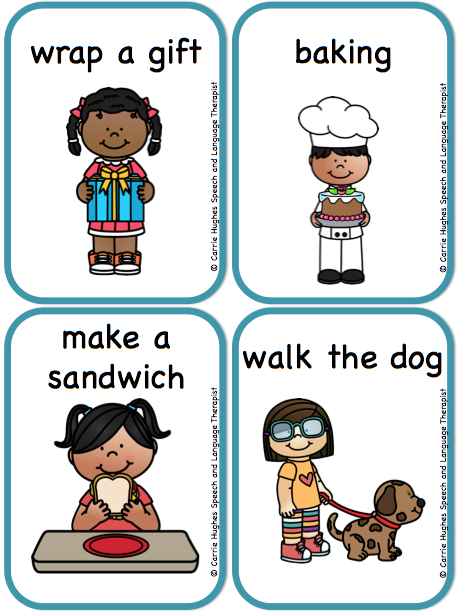
 Making Inferences - What do you see? This set comprises: 16 ‘clue’ cards with picture sets depicting an event or activity A set of ‘question ideas’ you can ask about each event or activity 16 answer cards with picture and word 16 answer cards with a picture The students should use the picture clues to work out the nature of the activity. Suitable for British and American English Suitable for Reception, Key Stage 1, SEN and EAL
 -

 Making Inferences can be challenging for so many of our children and adult clients, so here is another set to help build those skills. This set includes the tools needed for 10 occupations and 10 answer cards to visually support. Suitable for Reception, Key Stage 1, SEN, EAL Suitable for British and American English speakers
 -
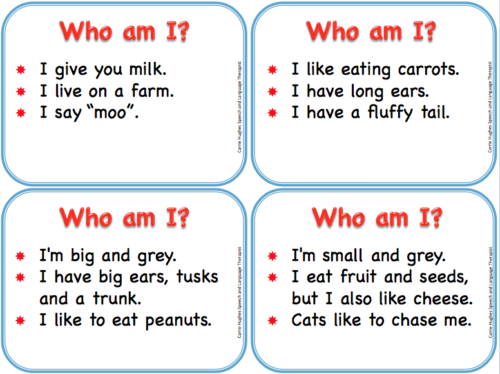
 This set includes:•28 ‘Who am I ? animal question cards with three or four questions per card.•28 ‘Who am I? animal question cards with highlighted clues.•28 Animal Images.'gold' coins for scoring.Play this game in small groups or individually.Targets the ability to make inferences from given information, categorisation, attention and listening, and receptive language skills.Written in British English.Suitable for Reception, KS1, EAL, and SEN
 -
 10 photo scenarios with blank levels questions Written in British English Suitable for Key Stage 2, Key stage 3, SEN, EAL, ALD, TBI and Aphasic populations


Stay up-to-date with all the news and latest resources.